
Learning about the physics of the aurora borealis usually means a lecture, a diagram, a photo on a screen — abstract for an audience of elementary-aged museum visitors who learn best by touching and doing. Fiske Planetarium needed an exhibit that turned charged-particle physics into something a seven-year-old could adjust, watch change, and understand.
←
Science Communication
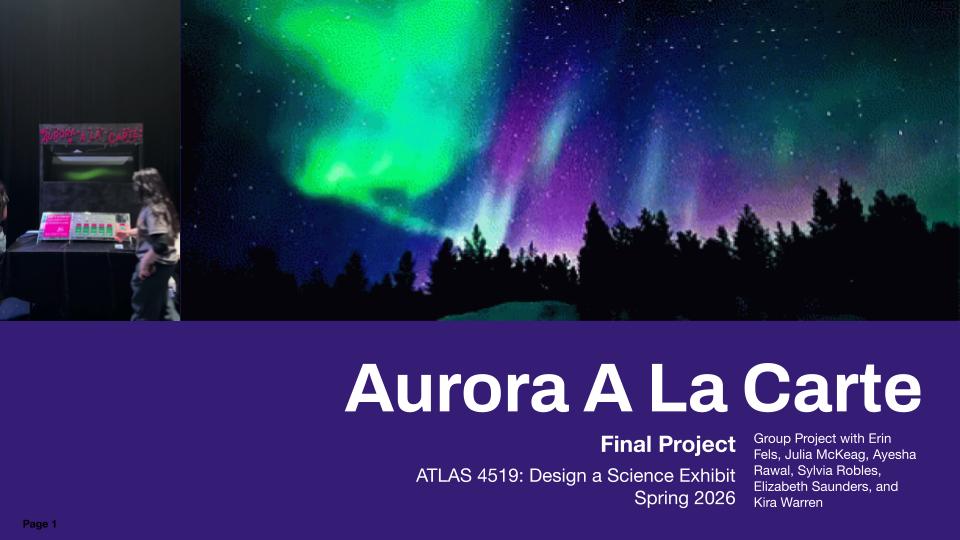
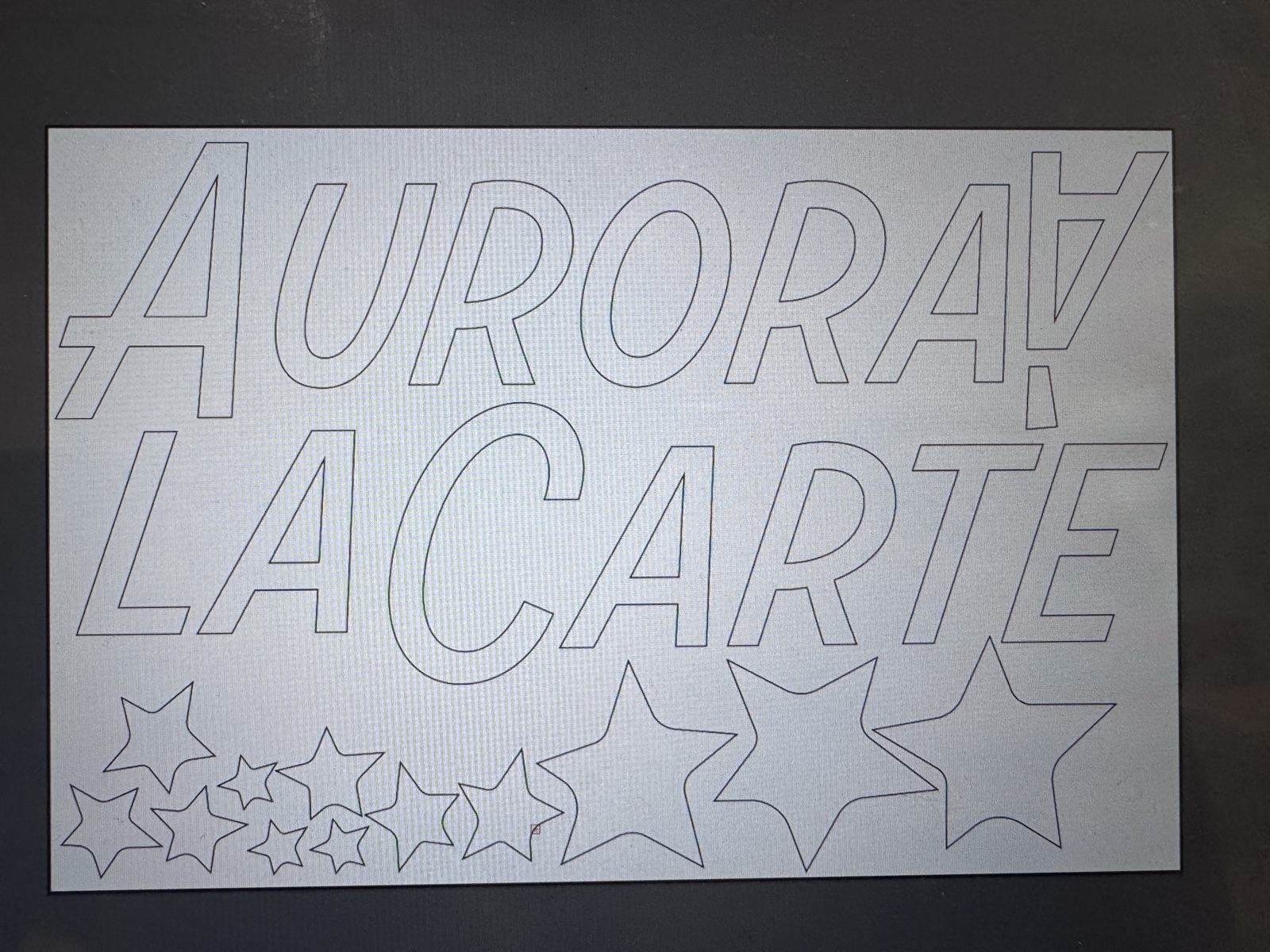
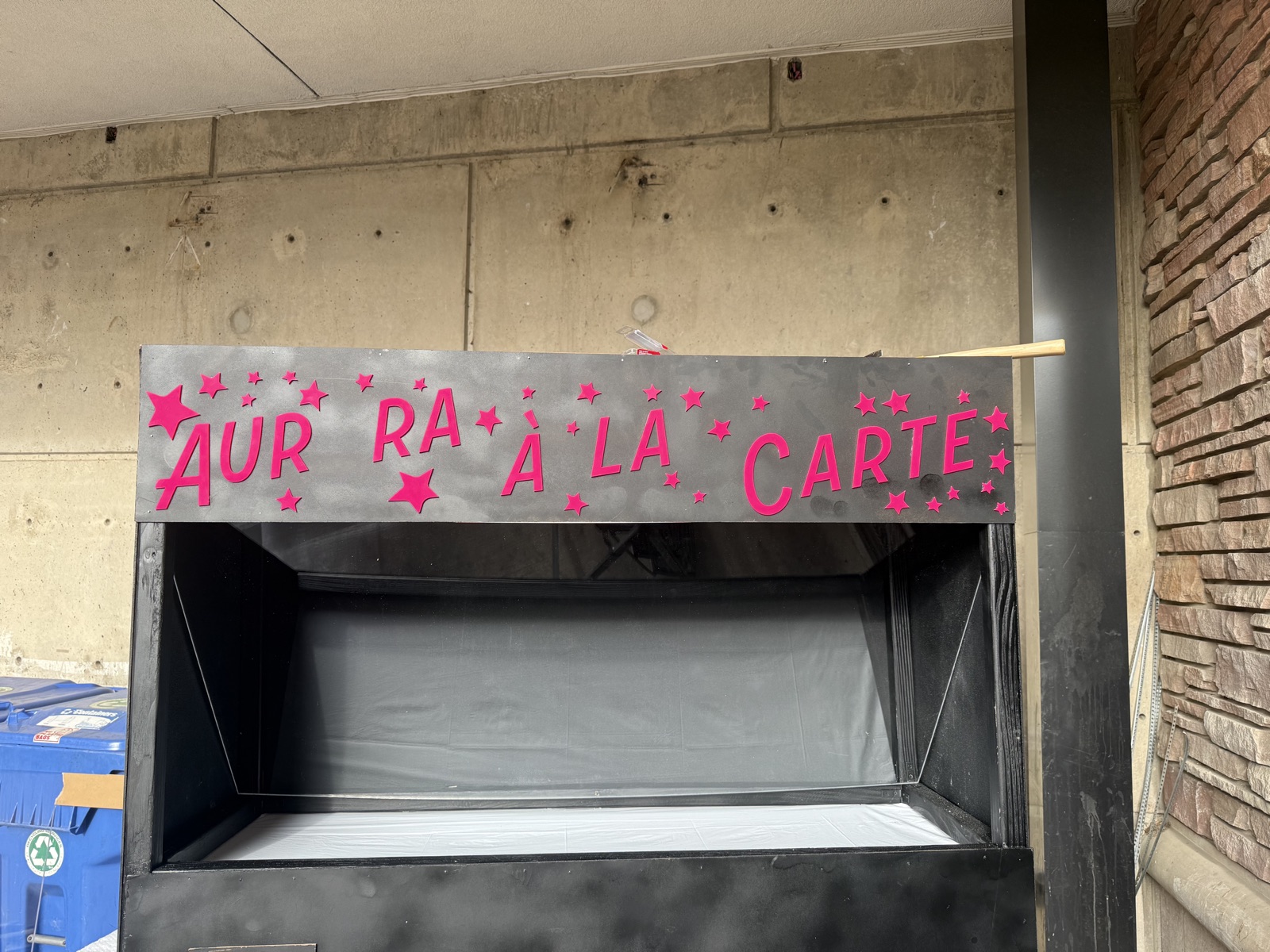
Aurora A La Carte
Connecting museum visitors with the physics of the aurora borealis, one recipe at a time.
The gap
My role
Built for CU Boulder's ATLS/CSCI 4519: Design a Science Exhibit, taught in collaboration with makers, scientists, and science communicators Eddie Goldstein, Ann Eisenberg, Wayne Seltzer, and Michael Banks. I worked alongside teammates Erin Fels, Julia McKeag, Ayesha Rawal, Sylvia Robles, and Kira Warren.
My role spanned science communication, research, and the interactive digital prototype. I translated the underlying atmospheric physics — charged solar particles funneling through Earth's magnetic poles, colliding with oxygen and nitrogen at varying altitudes to produce distinct colors — into an accessible, joyful experience, and built and iterated on the digital aurora simulation based on teammate and instructor feedback.
The key decision
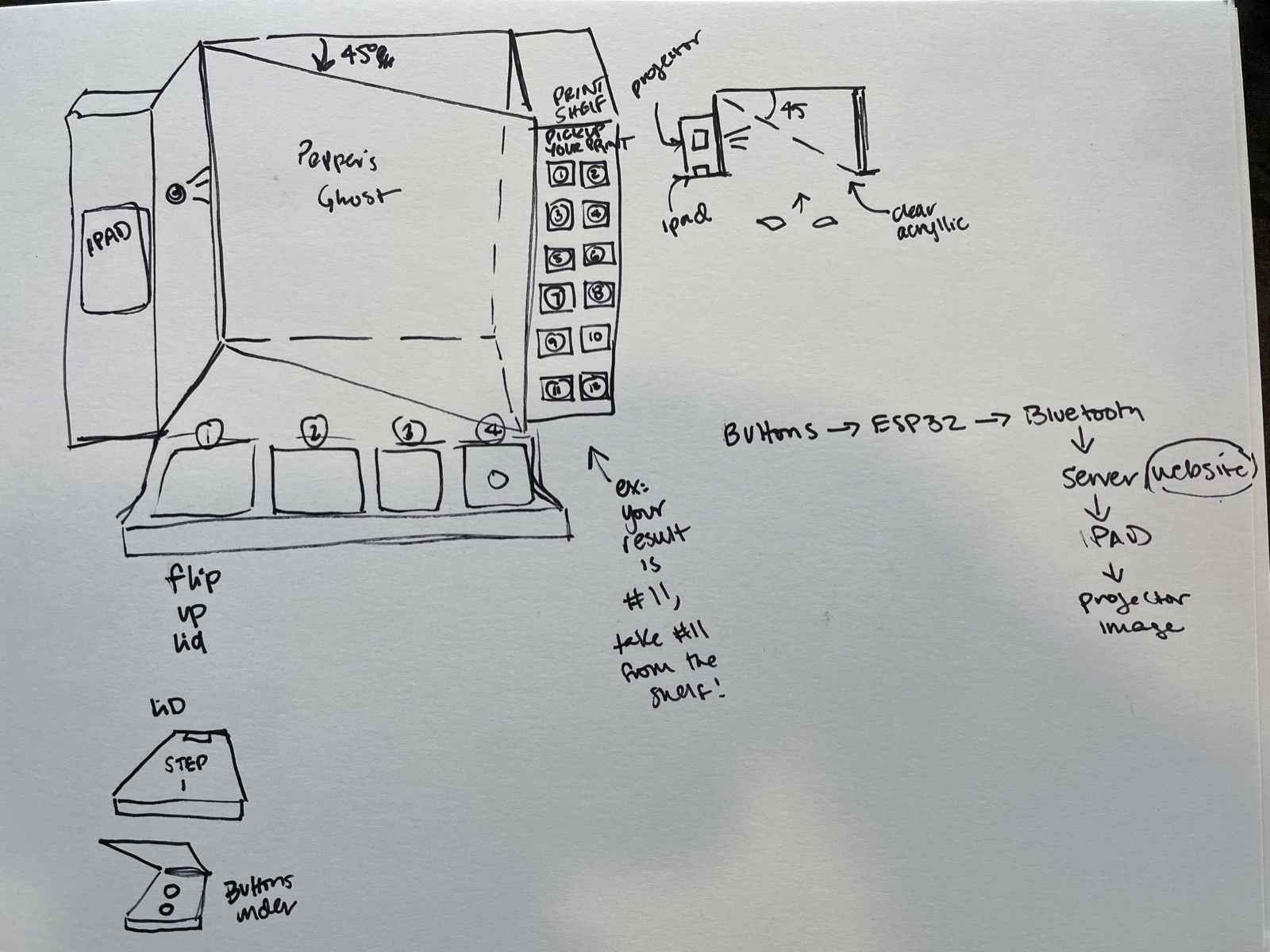
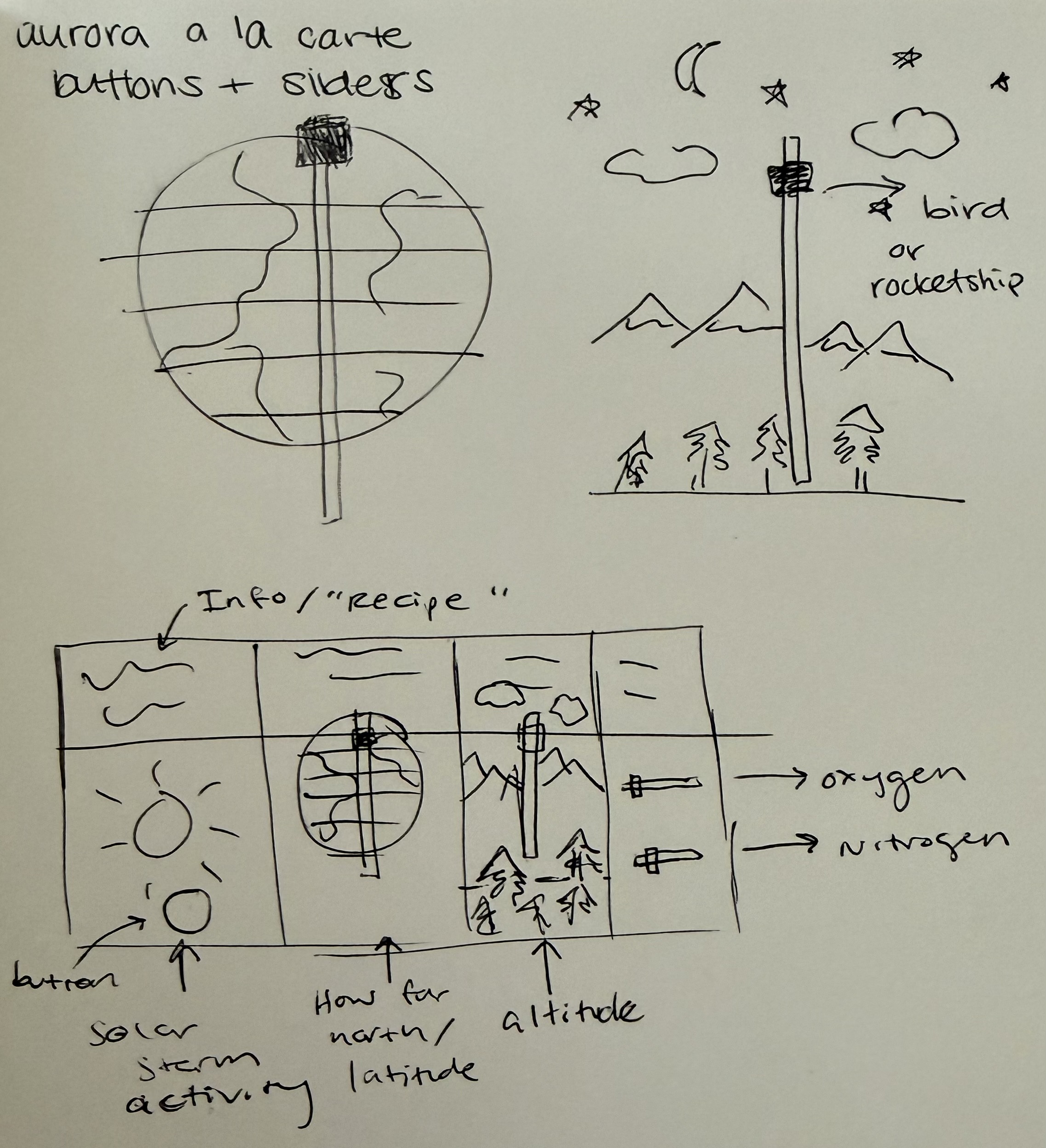
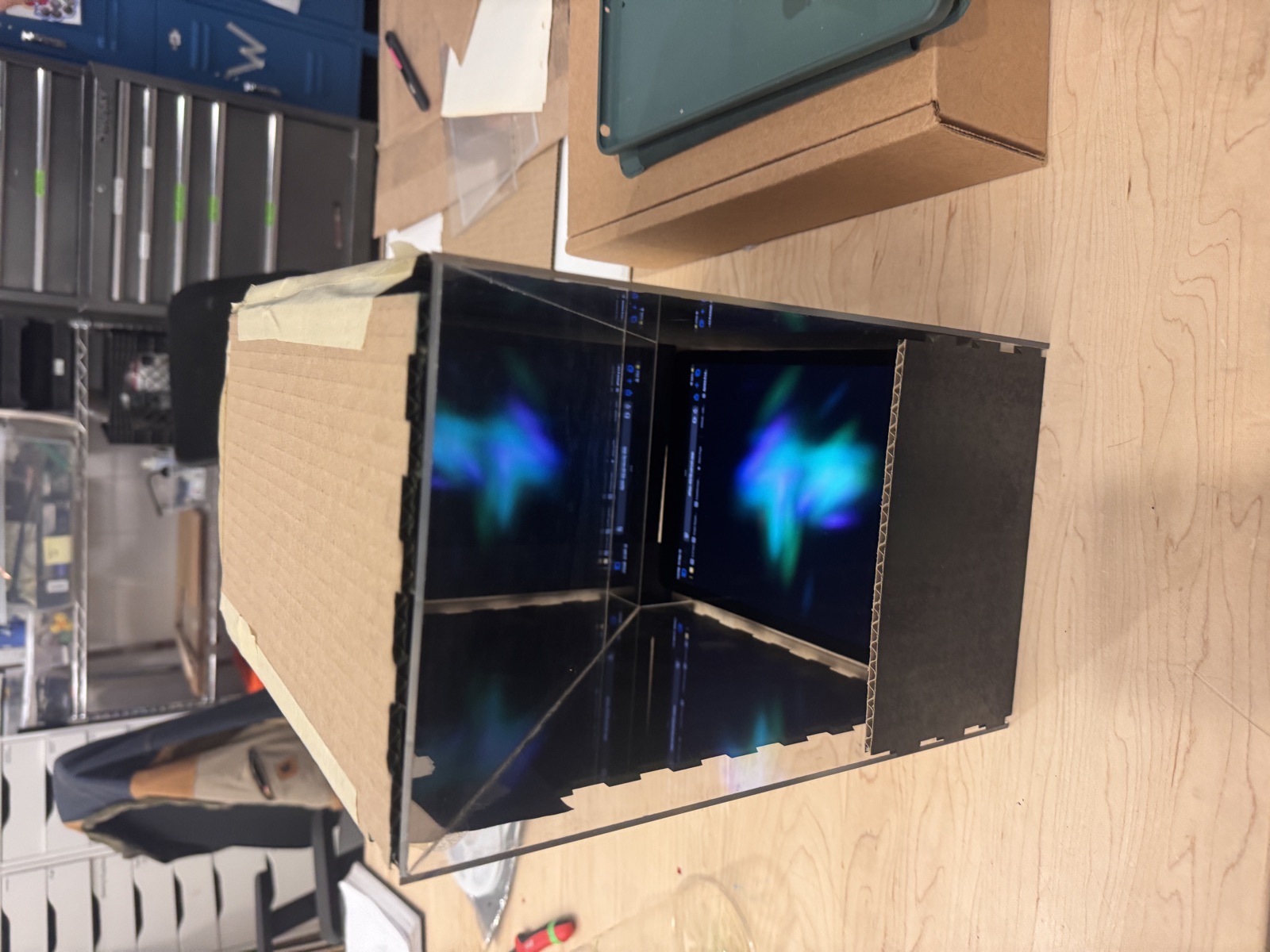
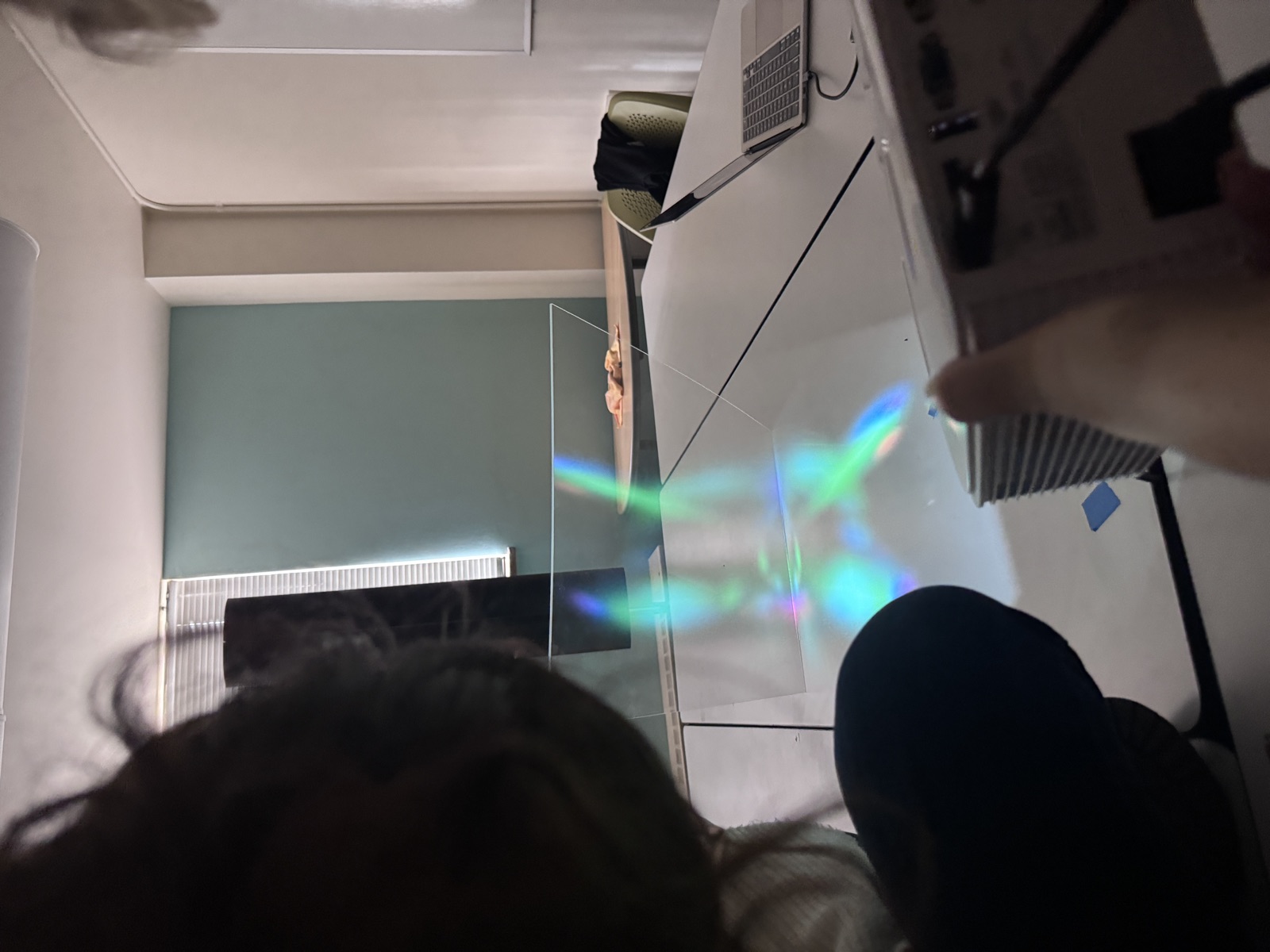
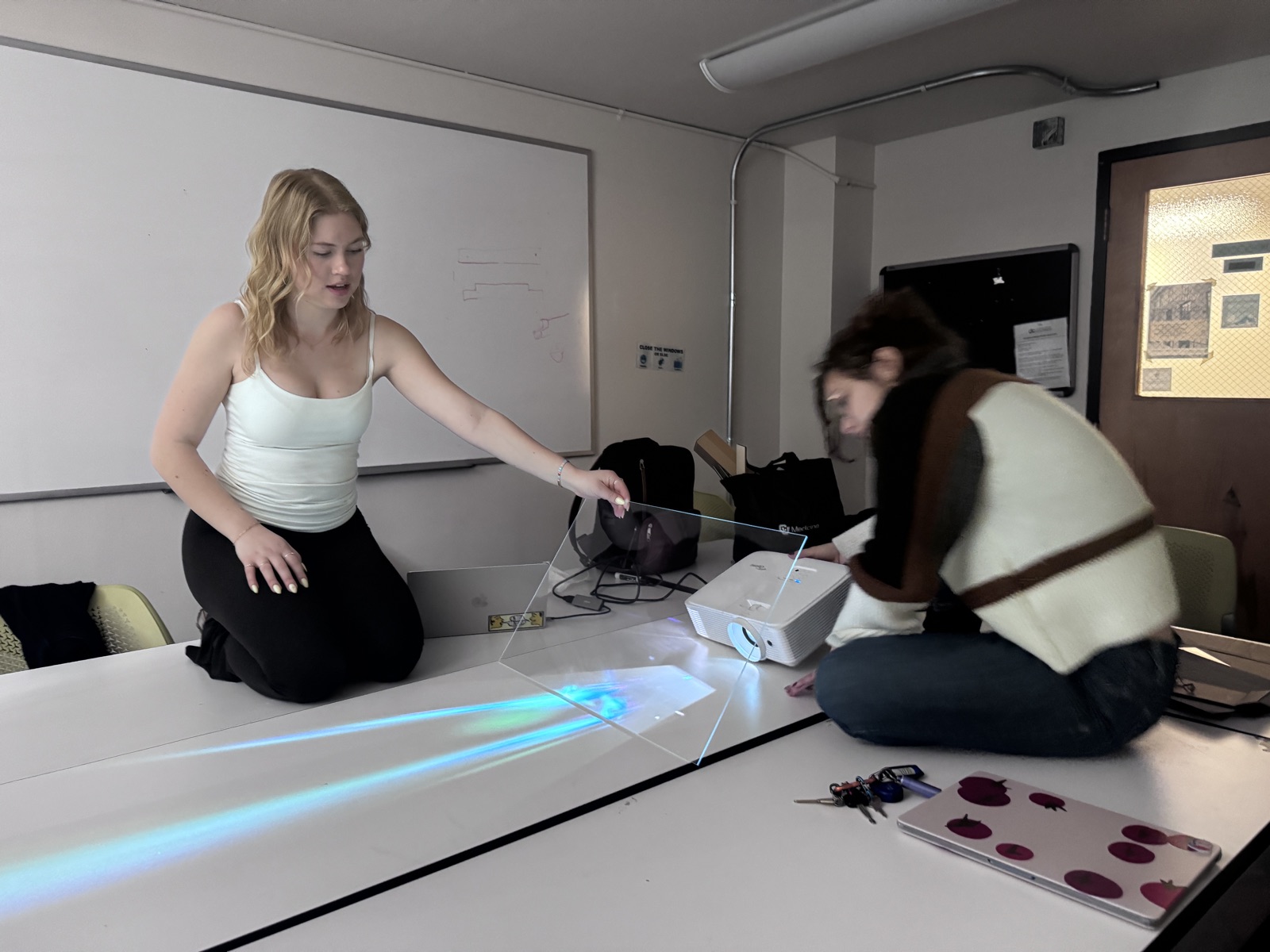
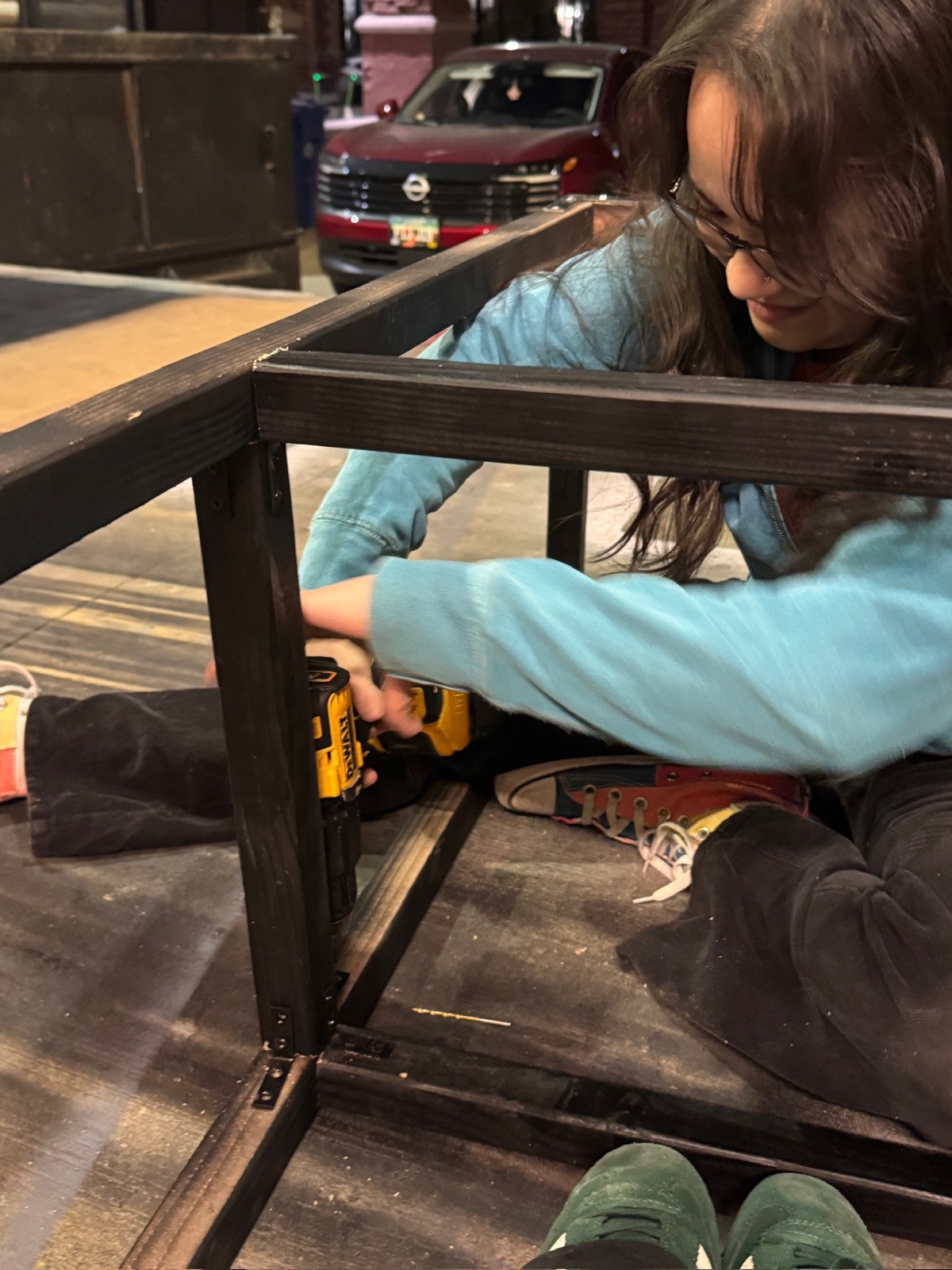
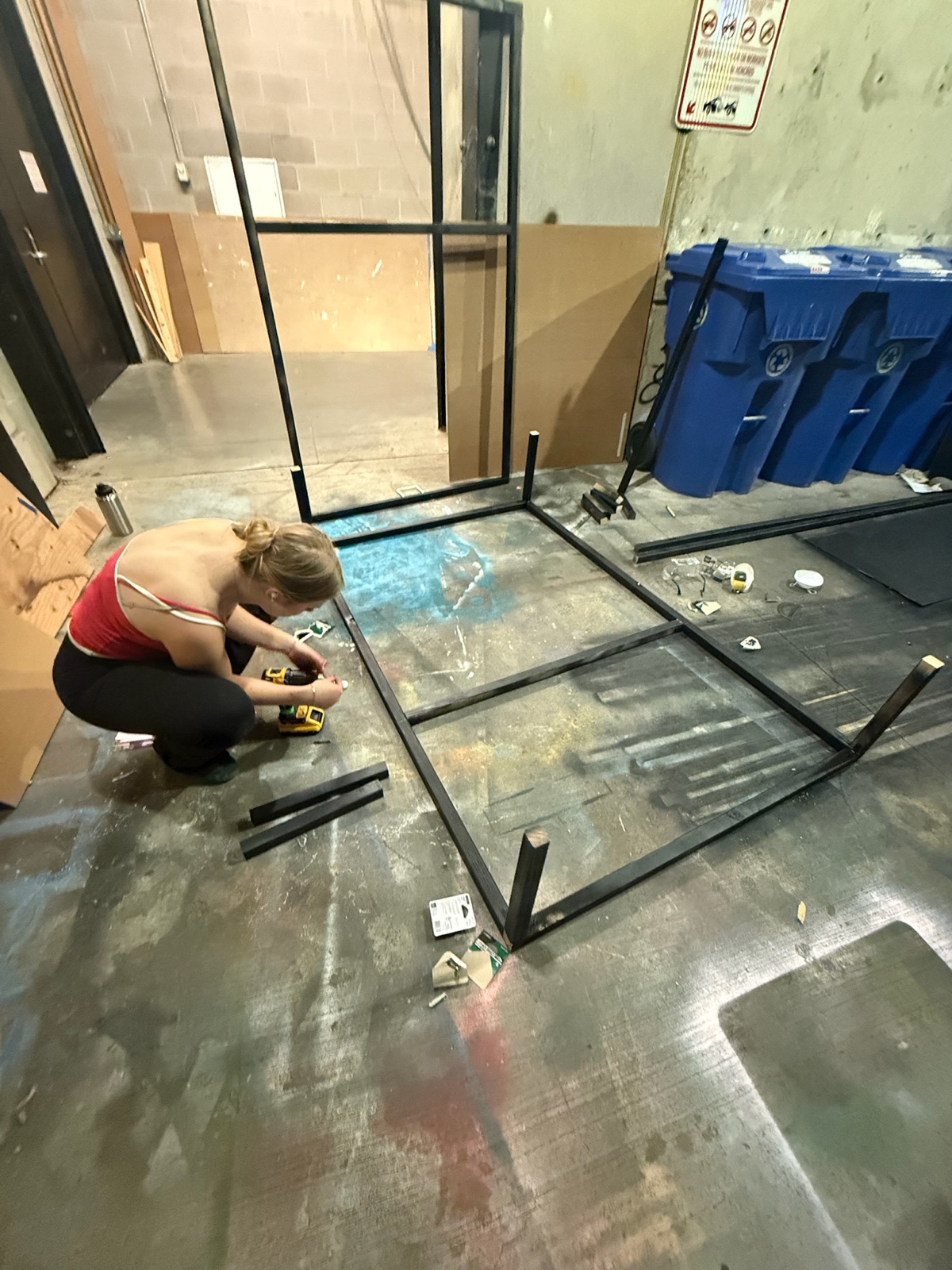
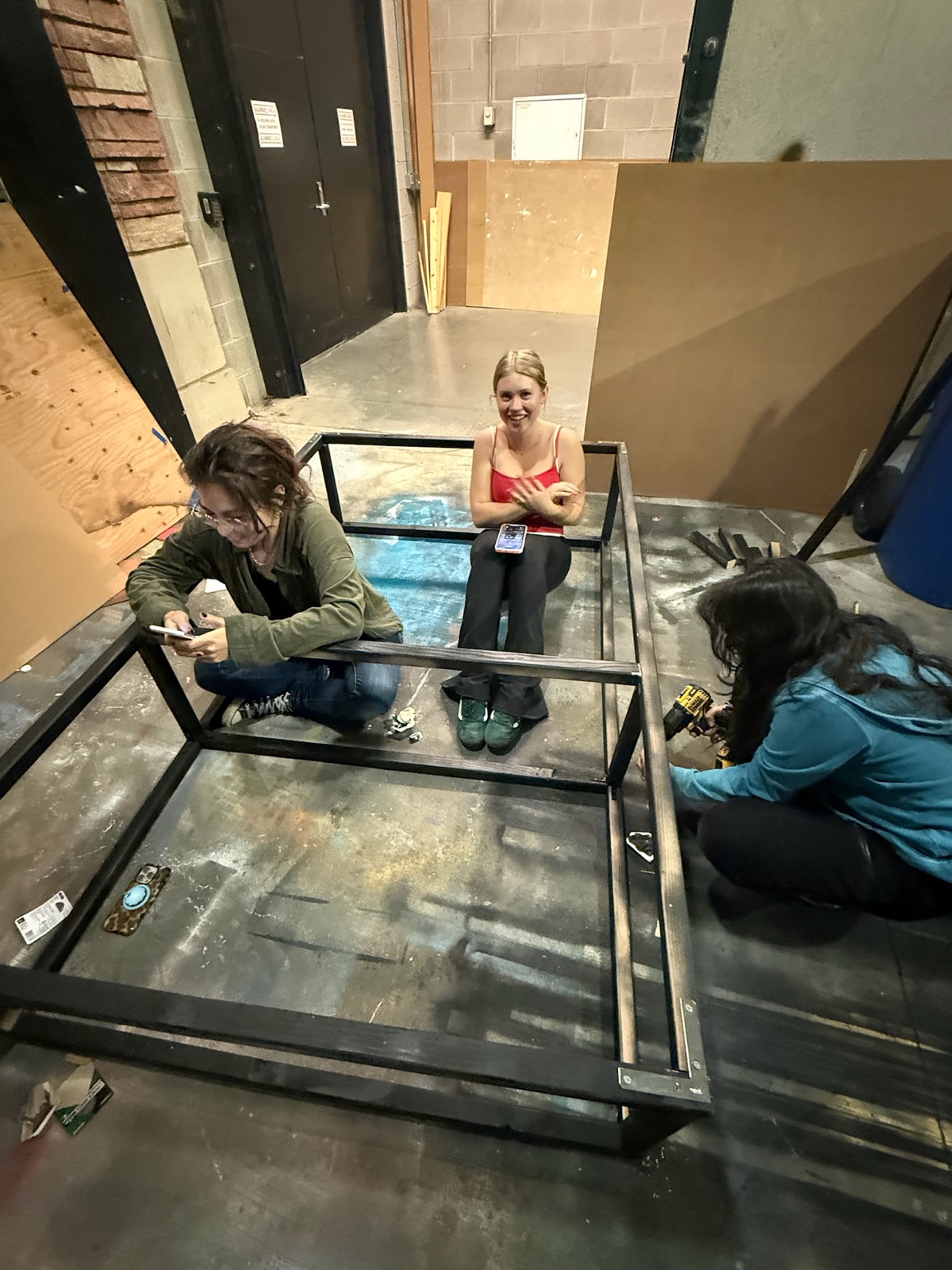
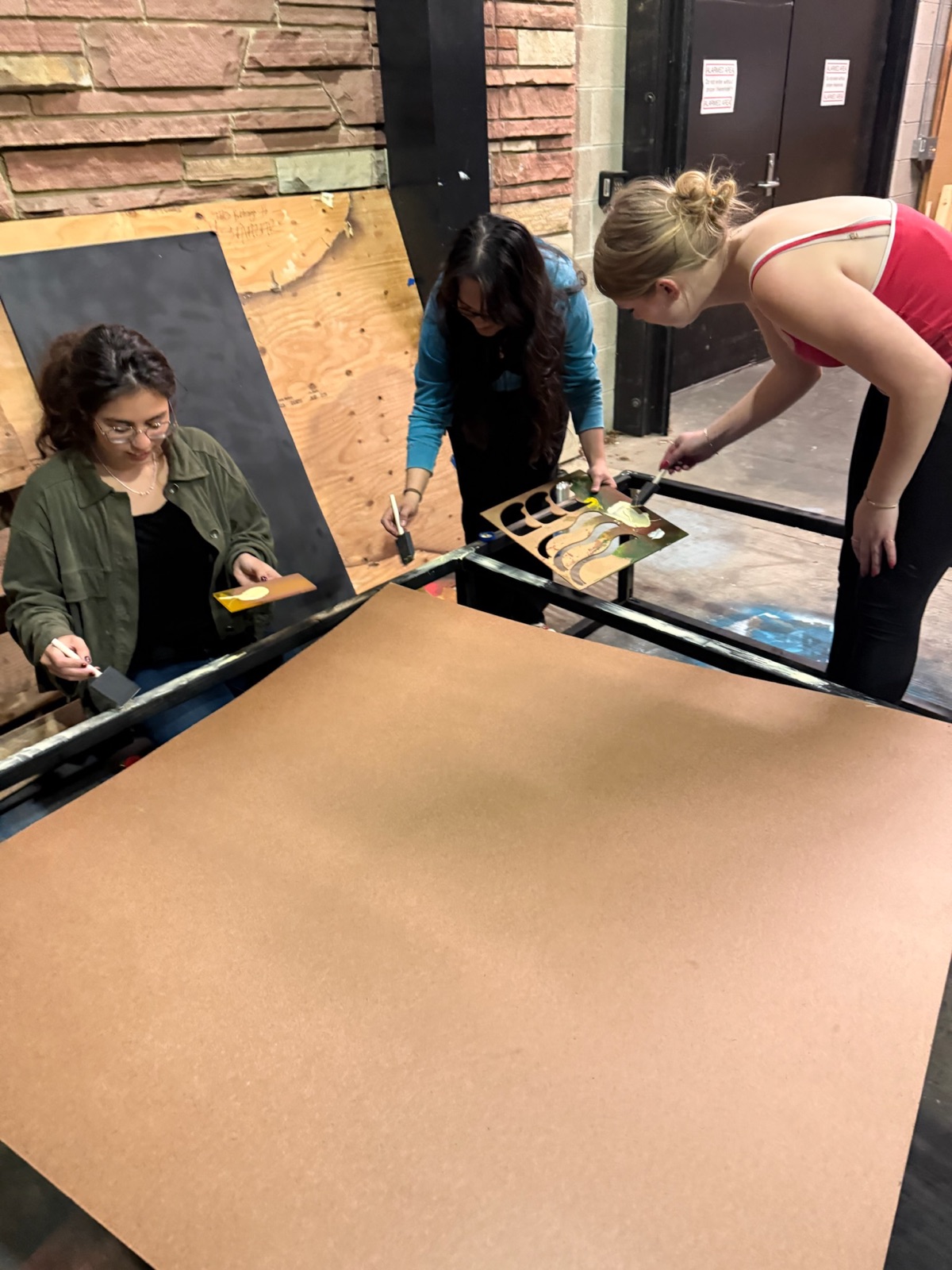
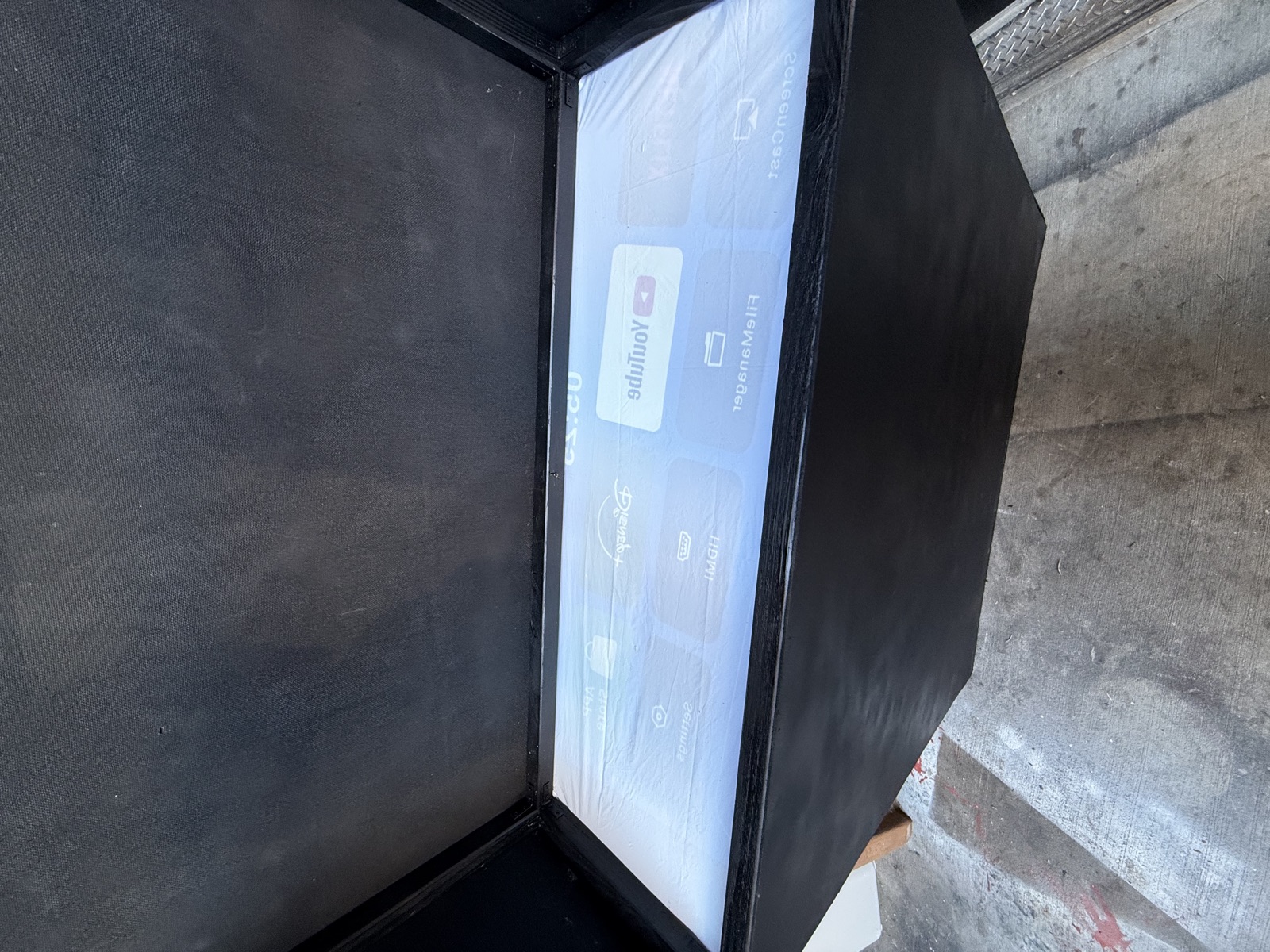
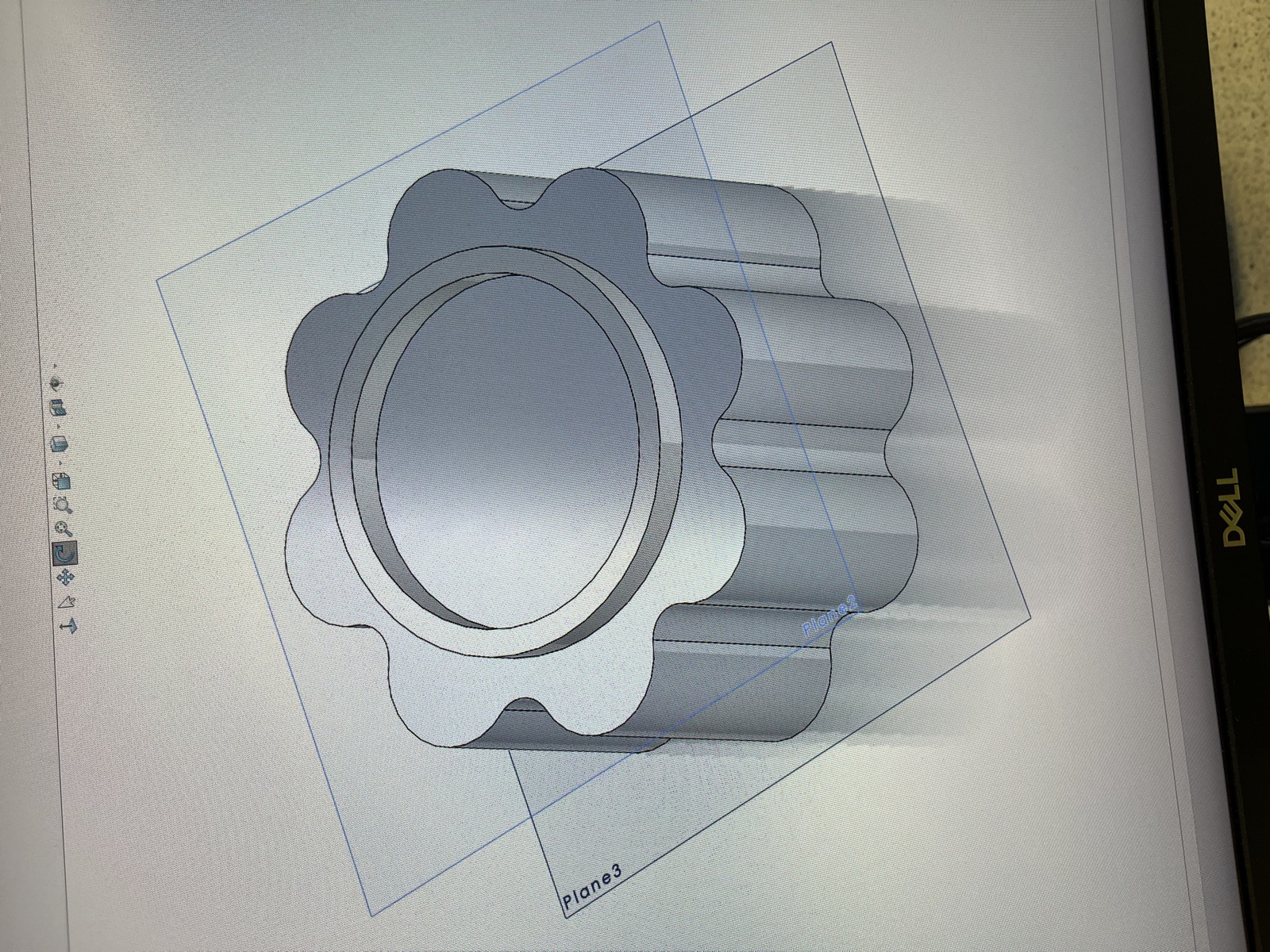
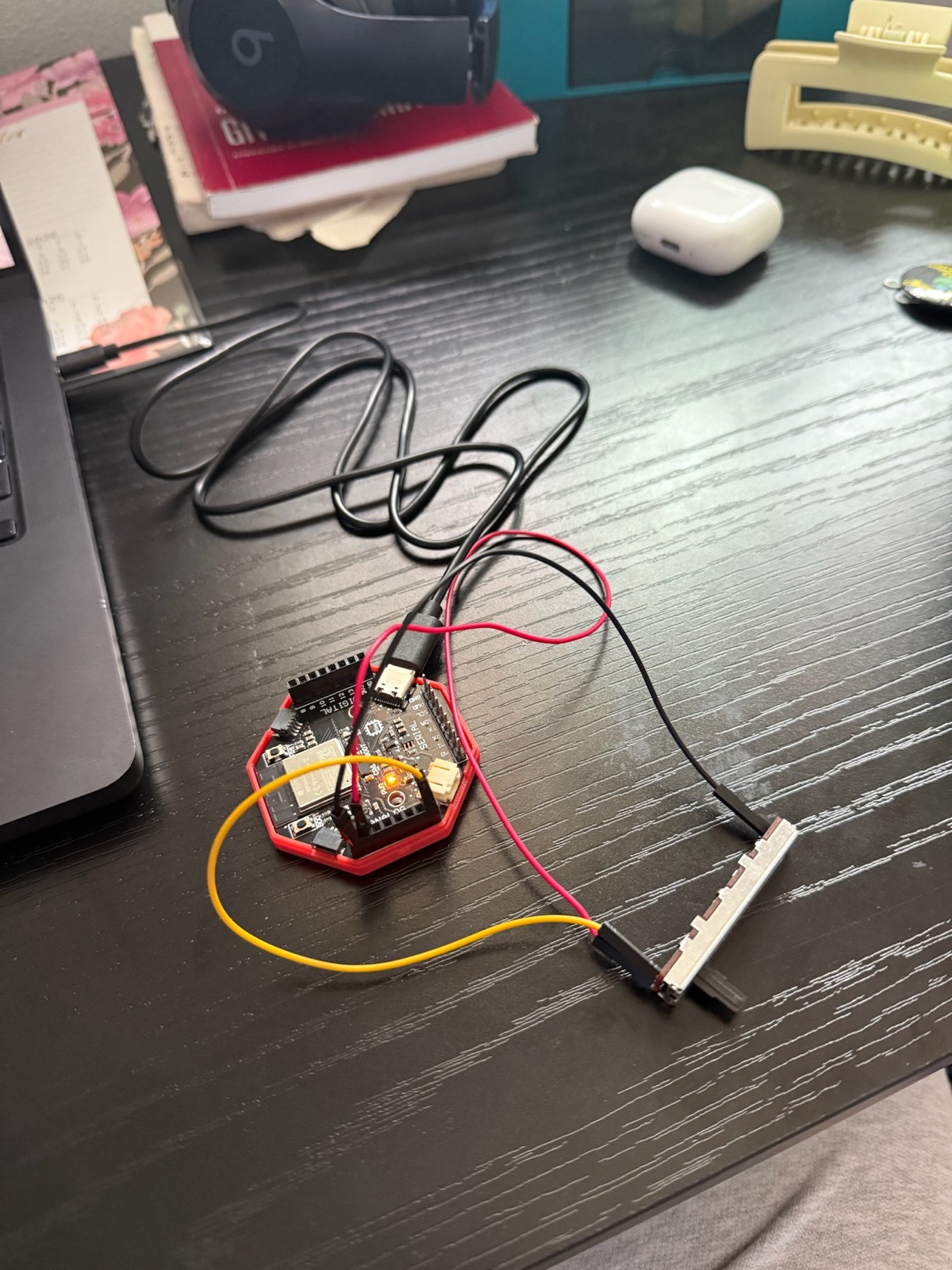
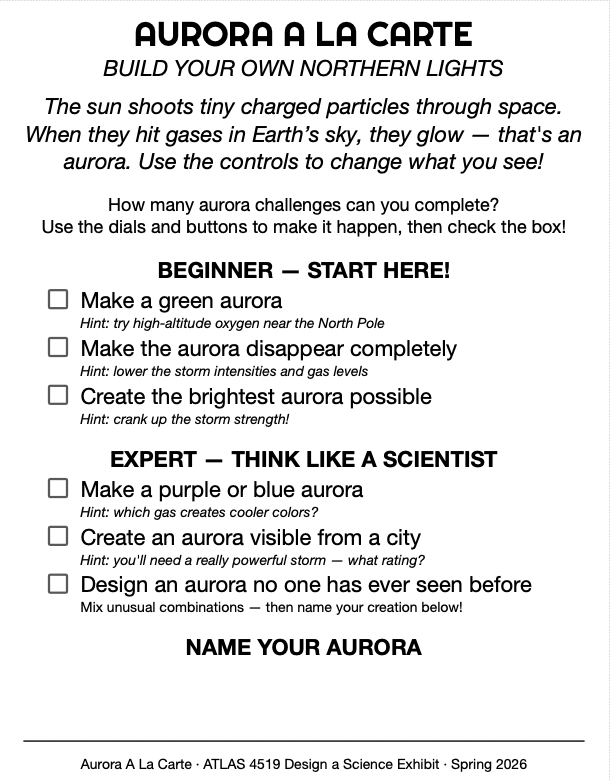
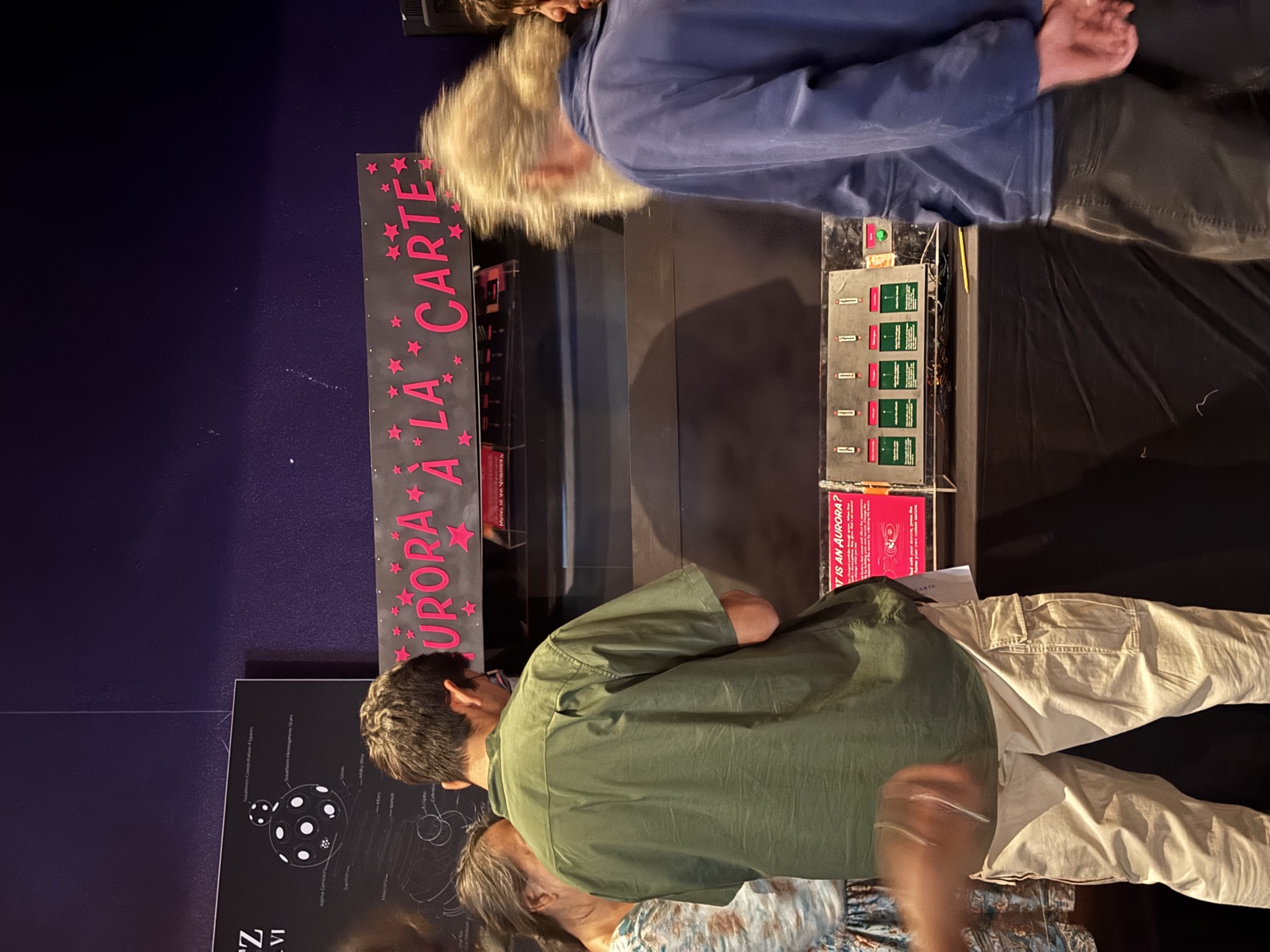
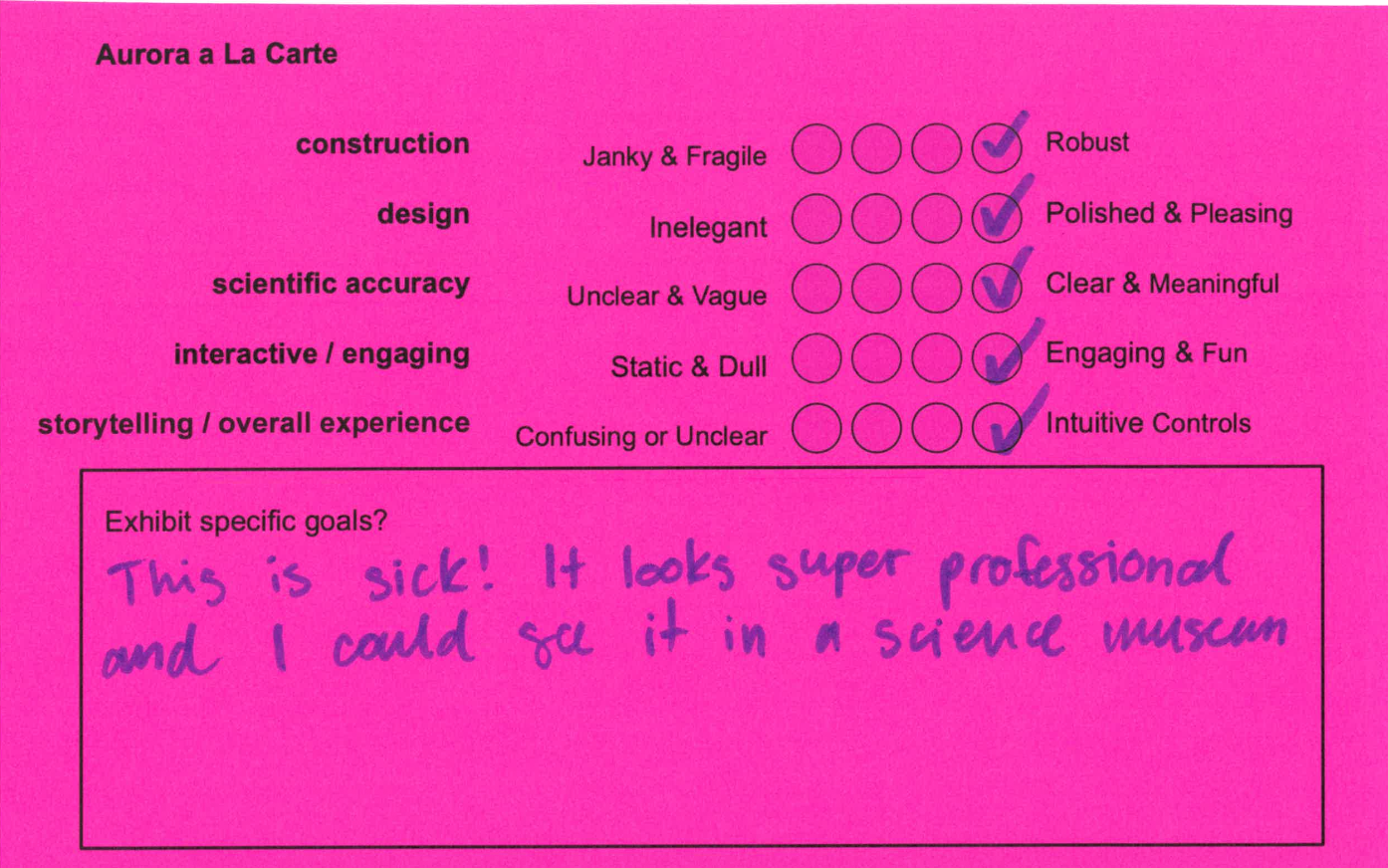
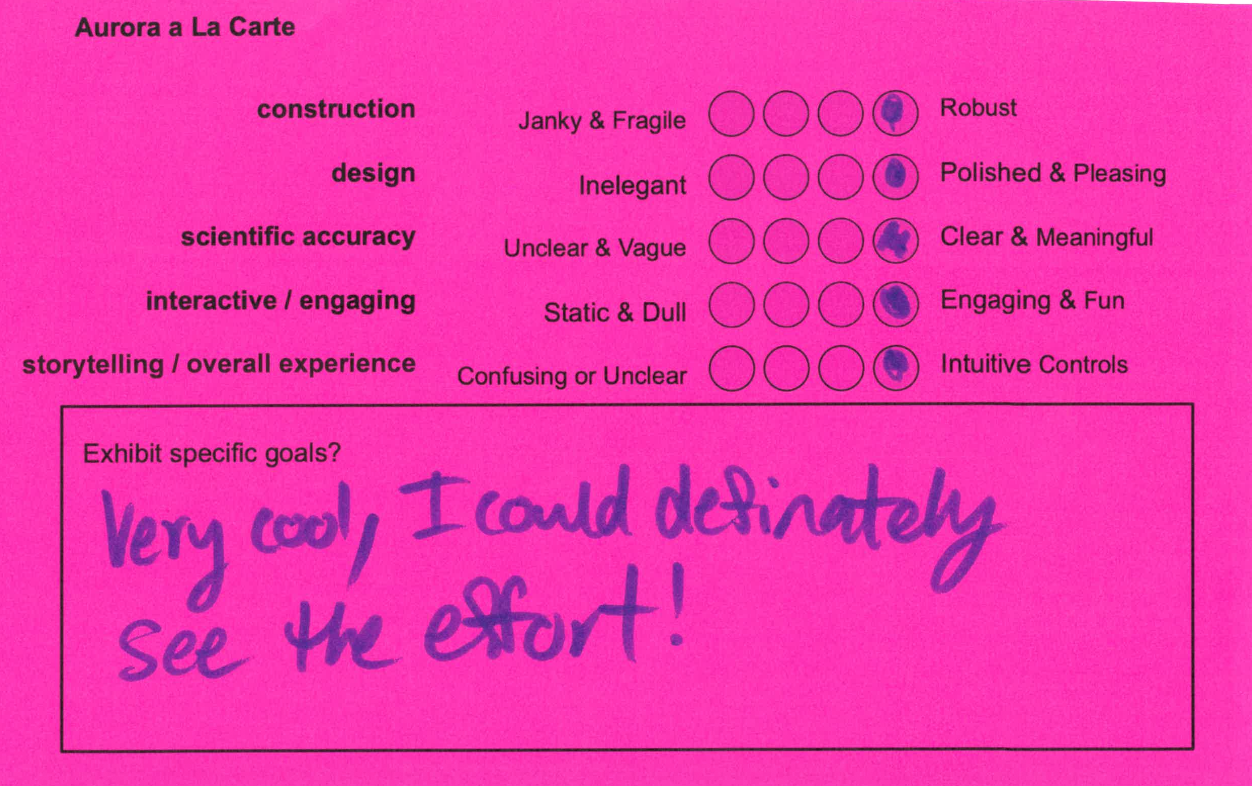
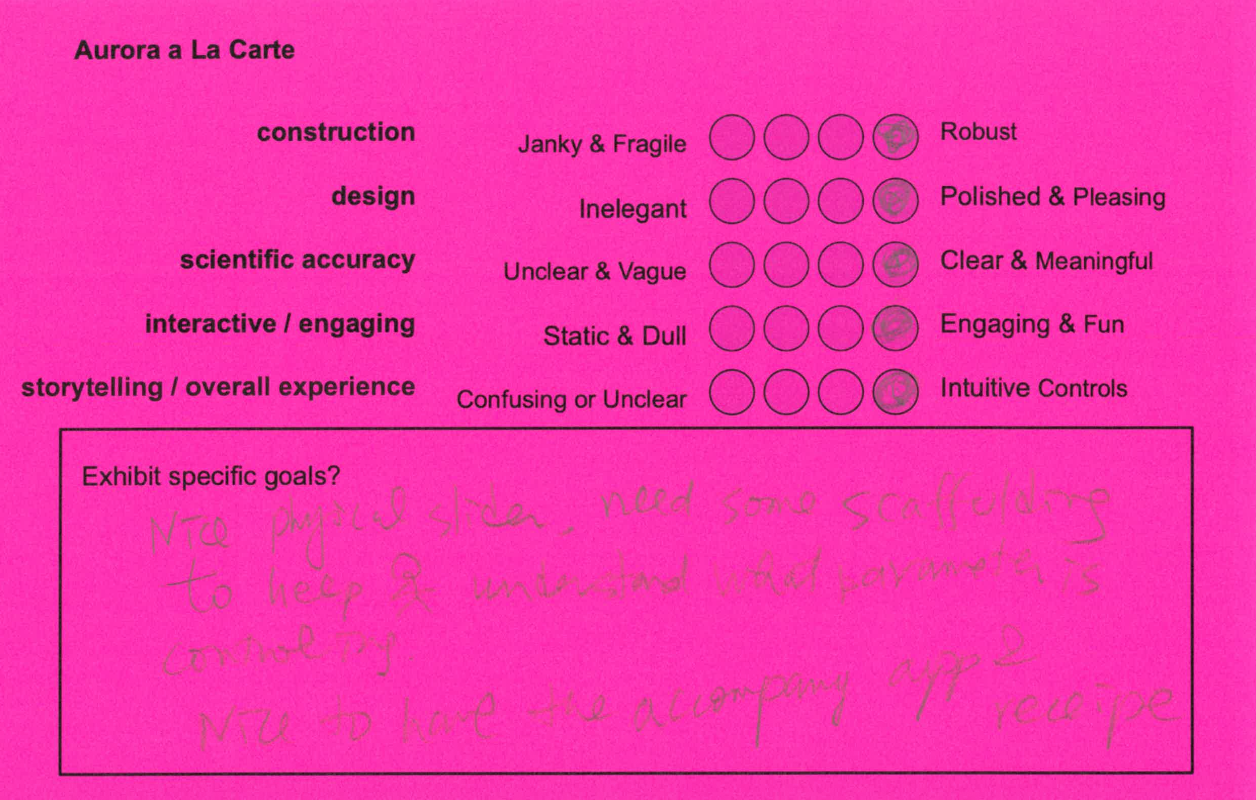
Instead of a screen-based simulation, we made the invisible physics tangible. Visitors step up to a dashboard of sliders and buttons and "cook up" their own aurora by adjusting altitude, geomagnetic activity, light pollution, and proximity to the poles. Each combination drives a real-time Pepper's Ghost illusion that renders their custom aurora in the air in front of them, and they leave with a printed recipe card of their creation. We tested it at Fiske Planetarium and showed it at the ATLAS Expo, guided throughout by one principle: idiot-proof, unbreakable, and genuinely fun.
What I built
Real-time Pepper's Ghost aurora projection
Renders a customized aurora in the air in front of the visitor as they adjust the dashboard.
Tangible dashboard
Sliders and buttons for altitude, geomagnetic activity, light pollution, and proximity to the poles.
Interactive digital aurora simulation
Iterated with teammates and instructors to make the projection more dynamic, organic, and responsive.
Printed recipe-card souvenir
Visitors leave with their aurora, their conditions, their creation.
Outcome
4
adjustable variables: altitude, geomagnetic activity, light pollution, pole proximity
2
exhibit showings: CU Boulder's Fiske Planetarium and the 2026 ATLAS Expo
28
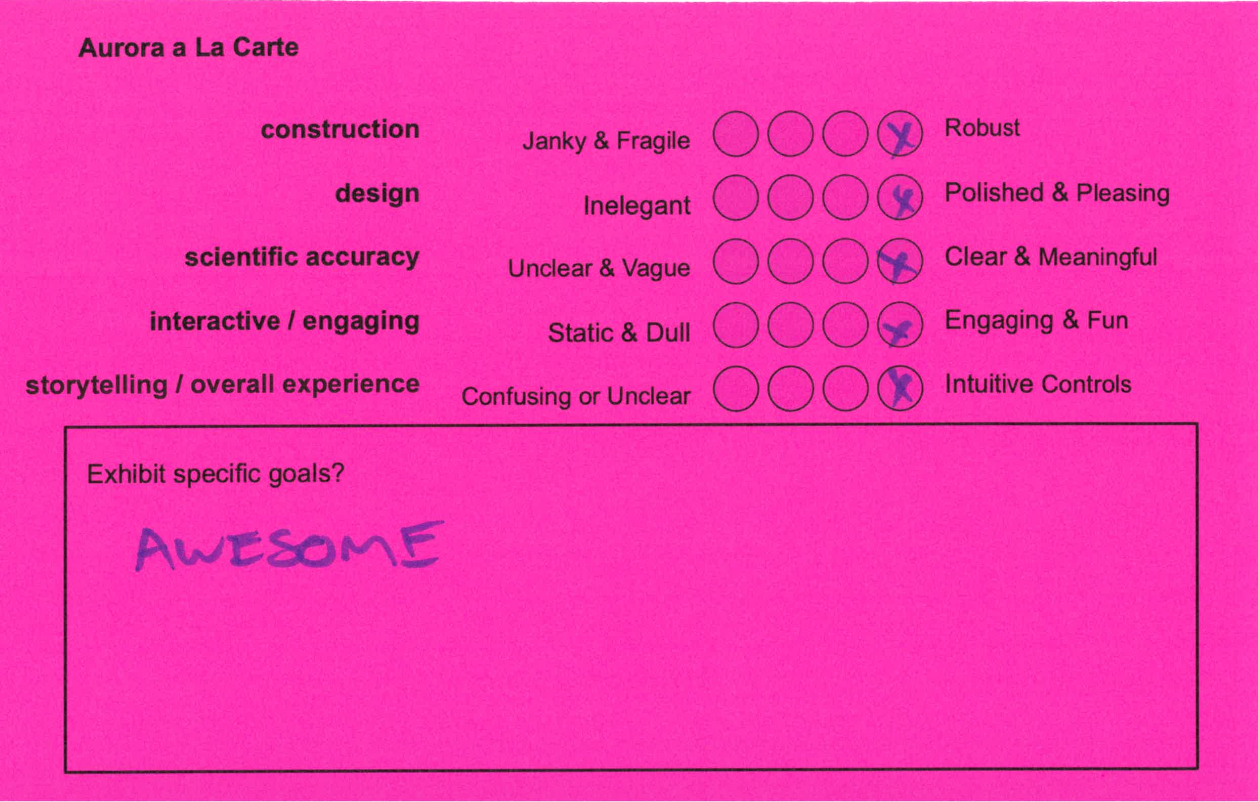
participants who engaged in our user testing